

From degradation to revitalization – an innovative method of treating mine water using algae
Intensive hard coal mining contaminates surface and groundwater with heavy metals and salts, which enter the environment together with so-called mine waters. These waters must be continuously pumped out to prevent mine flooding. It is therefore essential to develop effective methods for their treatment. Traditional approaches based on alkalizing agents are often inefficient, costly, and generate large amounts of sludge. An alternative solution is algae-based bioremediation, which is inexpensive, effective, and environmentally friendly.
A new paper published in Ecological Indicators by researchers from our Institute – Dr. Joanna Lenarczyk, Dr. Jolanta Piątek, and Prof. Konrad Wołowski – explores the use of so-called biological starters for the bioremediation of post-mining waters. Biological starters are algal consortia naturally capable of growing on durable substrates such as rocky material. The authors collected samples from two streams draining mine waters in Upper Silesia, as well as water from a wastewater treatment plant in Kraków. In the laboratory, they isolated and cultured algae present in the samples. They then carried out a laboratory experiment in which selected algal species were grown in collected water supplemented with rocky substrate. The study demonstrated that biological starters containing algal species adapted to specific pollution conditions can be produced within a relatively short time. Among the tested species, particular attention was drawn to Pinnularia appendiculata, Klebsormidium nitens, and Mougeotia sp. from post-mining streams, as well as Pectinodesmus pectinatus from the wastewater treatment plant.
Original article:
Lenarczyk J., Piątek J., Wołowski K. 2025. Towards rebuilding algae communities in post-mining ditches. Ecological Indicators 179: 114263. DOI
The research is funded by the National Centre for Research and Development (HYDROSTRATEG-II/0002/2023) within the project "A rock/biological system to increase biodiversity and self-purification of surface waters, combined with preventive monitoring of algal blooms (HydroBiom)". The project is carried out by a consortium consisting of the W. Szafer Institute of Botany, Polish Academy of Sciences (leader), the AGH University of Science and Technology in Kraków, the Research and Production Centre "Alcor" Ltd., and the Mine Restructuring Company S.A. in Bytom.
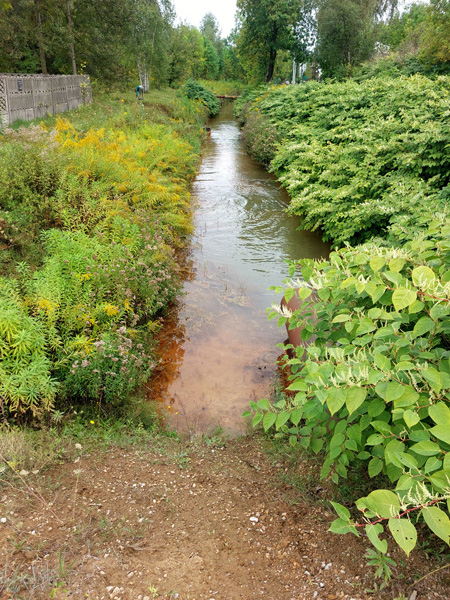
"Bolko" – one of the investigated post-mining watercourses.
Photo: Bartosz Kulig
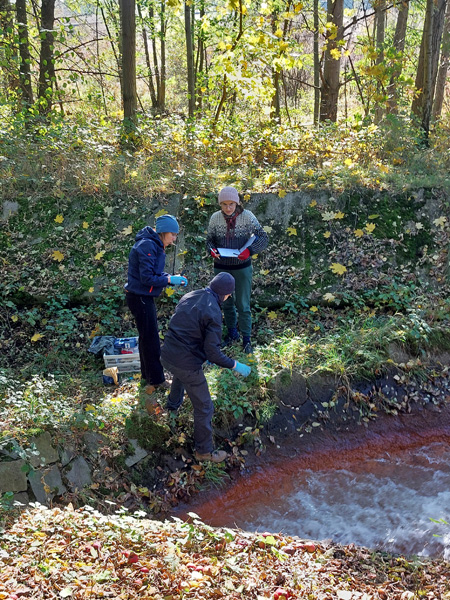
Sampling for the study from the "Saturn" post-mining watercourse.
Photo: Konrad Wołowski
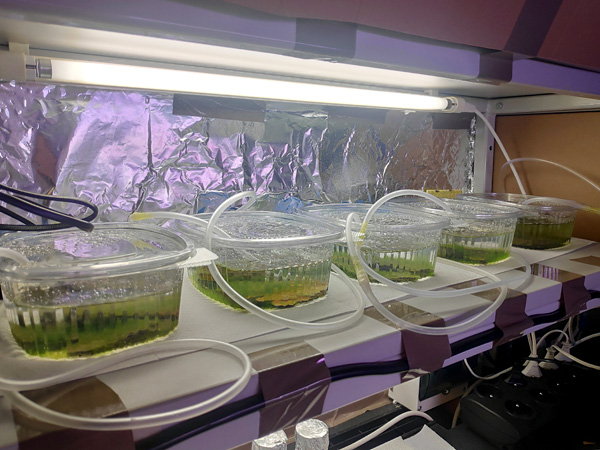
Laboratory experiment.
Photo: Bartosz Kulig
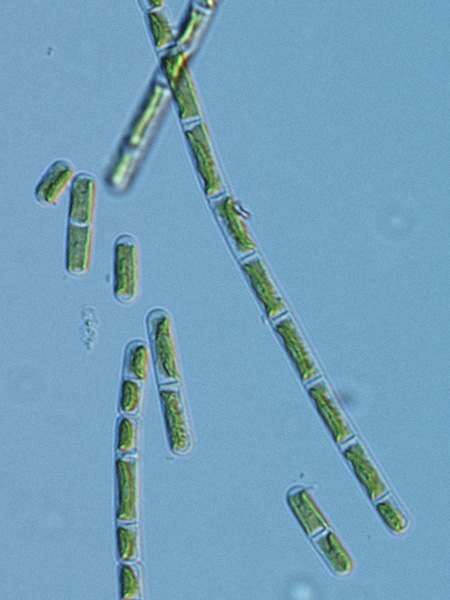
Klebsormidium nitens.
Photo: Konrad Wołowski
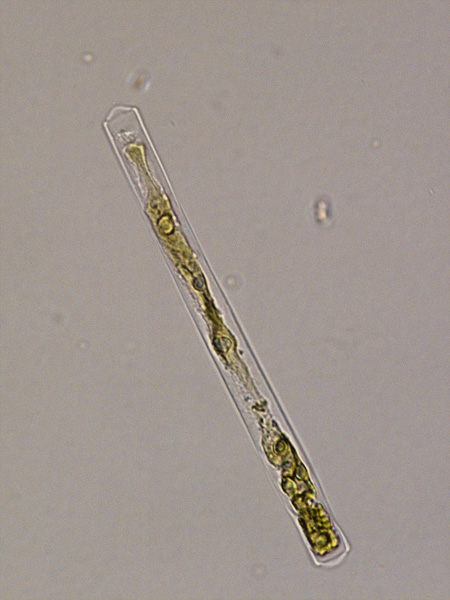
Mougeotia sp.
Photo: Joanna Lenarczyk
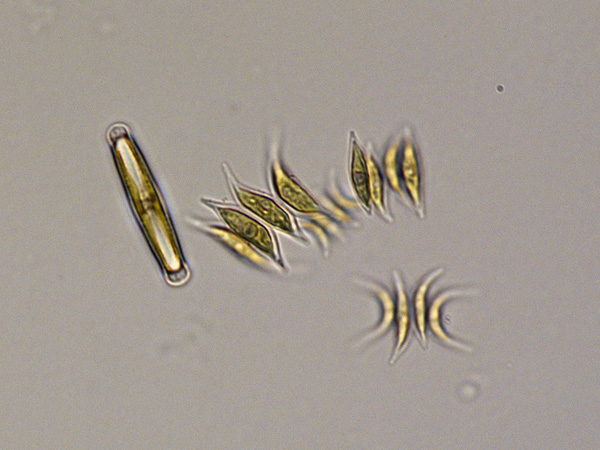
Pinnularia appendiculata (left) and Pectinodesmus pectinatus (right).
Photo: Joanna Lenarczyk


