

Environmental selection explains distribution patterns of closely related evening primrose species in Europe – new paper
In order to function in changing environments, plants have evolved a wide range of adaptive mechanisms, both morphological and physiological. These include short-term responses, long-term acclimation processes, as well as permanent heritable adaptations. An excellent model for studying plant adaptation, particularly in the context of ongoing climate change, is the genus Oenothera (evening primrose), native to the Americas. Since the 15th century, numerous taxa of this genus have been intentionally introduced or accidentally transported to all continents except Antarctica. In Europe, evening primroses found suitable habitats, began to spread, and hybridized with one another, giving rise to new hybrid lineages.
A recent paper published in Scientific Reports examined the occurrence of three closely related evening primrose species in Europe in relation to their adaptations to environmental conditions, reflected in morphological traits and modifications of the photosynthetic apparatus. A team of researchers led by Dr. Monika Woźniak-Chodacka from our Institute demonstrated that the studied species exhibit three distinct distribution patterns. Oenothera rubricaulis, occurring mainly at higher latitudes, has the smallest flowers and the highest chlorophyll content, accompanied by anthocyanin accumulation that enhances light utilization under low-light conditions. In contrast, O. suaveolens, found predominantly at lower latitudes, is characterized by the largest flowers, a purely green phenotype (absence of red anthocyanins in plant organs), and the highest stomatal conductance. This species also employs strategies protecting against high light intensity, including rapid photoinhibition and hyponasty. The most widespread species, O. biennis, exhibits an intermediate phenotype relative to the other two species, together with the greatest plasticity and adaptability of the photosynthetic apparatus.
Given the close relatedness of O. rubricaulis, O. suaveolens, and O. biennis, the results suggest that environmental selection following hybridization played a key role in shaping the distribution ranges and establishment of these taxa in Europe.
Original article:
Woźniak-Chodacka M., Kocurek M., Pilarska M., Niewiadomska E. 2025. Environmental selection underlies distinct distribution patterns of closely related European evening primroses. Scientific Reports 15: 4436. DOI
The study was conducted in collaboration with the Franciszek Górski Institute of Plant Physiology, Polish Academy of Sciences, and was partially funded by the National Science Centre Miniatura 2 project (2018/02/X/NZ8/01255).

Flowering specimen of Oenothera suaveolens.
Photo: Monika Woźniak-Chodacka
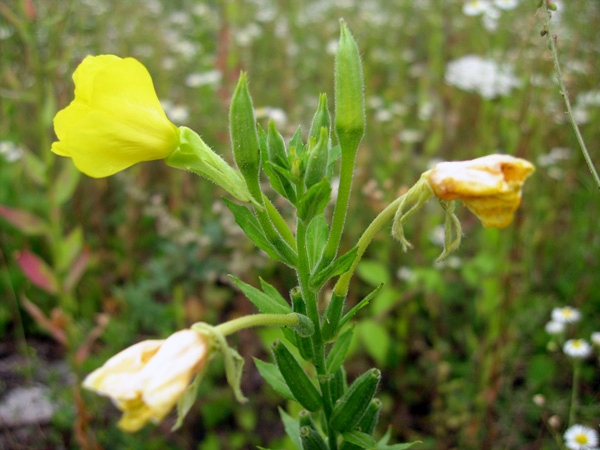
Flowering specimen of Oenothera biennis.
Photo: Monika Woźniak-Chodacka
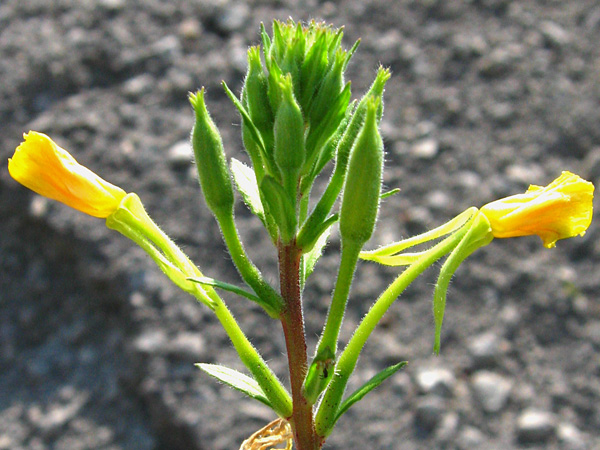
Flowering specimen of Oenothera rubricaulis.
Photo: Monika Woźniak-Chodacka
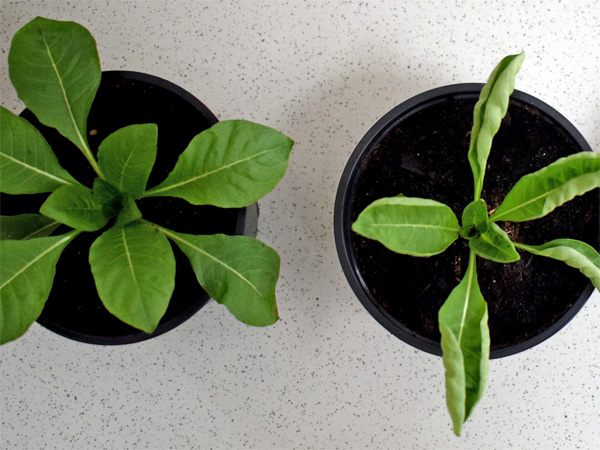
Experimental cultivation of evening primroses: O. biennis (left) and O. suaveolens (right).
Photo: Monika Woźniak-Chodacka

The author of the study collecting seeds for cultivation.
Photo: Marcin Chodacki


